Are the Challenges In The Design & Build Sector Forcing AI Adoption?
A survey of 67 respondents, including both B2B (87%) professionals and B2C (13%) end-users, provides insight into the current pain points across architecture, interior design, and construction. The findings highlight that traditional design and build methods remain fragmented, with inefficiencies in budget control and project timelines contributing to a lack of confidence in delivery. Due to these challenges, it is obvious that there is a growing interest in AI technology & tool integration.
A clear trend emerges around project complexity and coordination challenges. The majority of respondents were involved in residential projects, particularly new builds, internal refurbishments and extensions. With the remaining participants sharing their experiences from commercial, retail and hospitality sectors. Despite project values ranging from £250K to over £1M, respondents reported disproportionately high levels of difficulty. Delays (82%), cost overruns (64%), and poor coordination (59%) were the most common issues. These challenges are closely linked to the fragmented workflow, where architects, contractors, engineers, and consultants must collaborate, often without fully aligned systems. Compliance requirements further compound these issues, particularly in navigating planning approvals and building regulations.
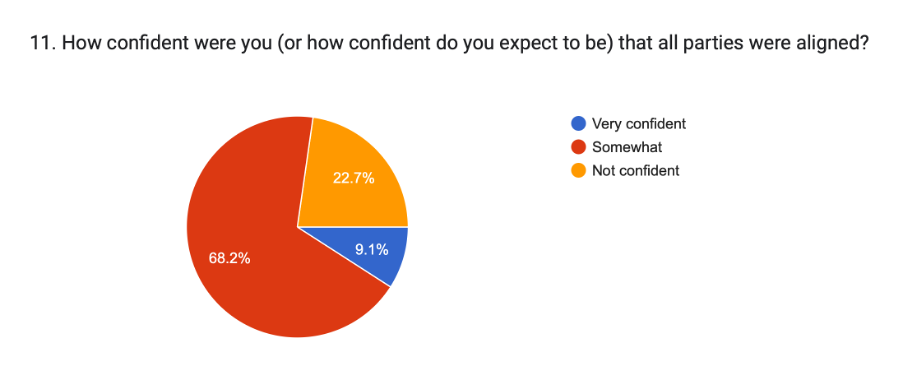
Fragmentation further reflects a low in confidence and limited visibility. Half of the respondents reported having no real-time visibility of project progress or costs, and 68% were not confident that all parties were aligned. Miscommunicationmost frequently occurred around design changes (77%) and project timelines (73%), pointing to systemic gaps in information sharing and decision-making processes.
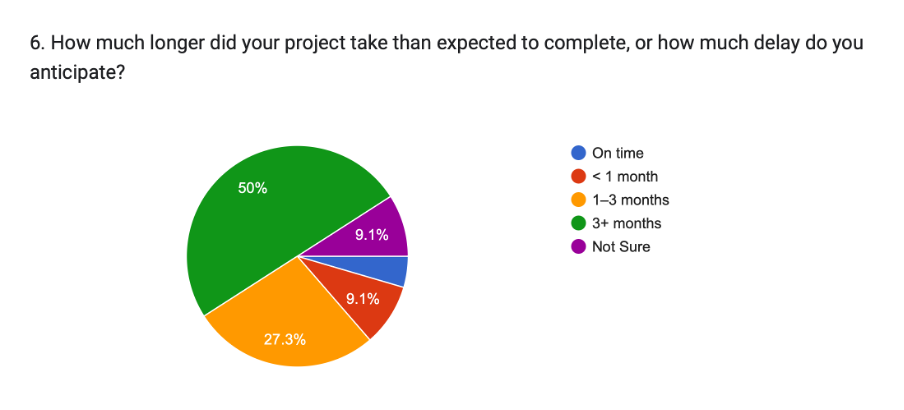
Time and cost inefficiencies remain a major concern. Over 50% of projects experienced delays exceeding three months, with an additional 40% extending beyond expected delivery timelines. Budget overruns were also common, with 46% of projects exceeding costs by 25–50%. In parallel, many respondents reported spending an additional 10–20+ hours per week managing projects, highlighting the absence of streamlined project management support.
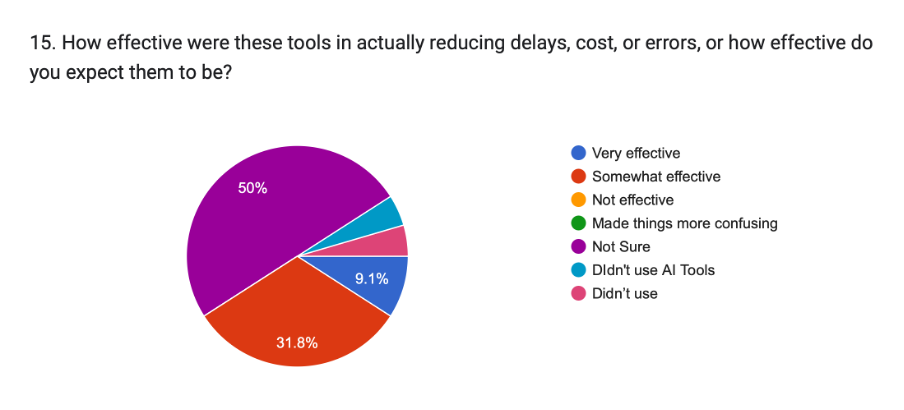
When assessing AI adoption, 77% of respondents indicated they have used AI tools, primarily for design ideation, cost estimation, and comparing options. However, effectiveness remains mixed. Only a small proportion found these tools highly effective, with most describing them as only somewhat helpful. Key limitations include a lack of real-time accuracy, poor integration with construction workflows, and limited trust in outputs.
However, there is a strong demand for integrated digital solutions. A majority of respondents expressed interest in a single platform that manages design, cost, compliance, and delivery as valuable. Desired outcomes include lower costs (68.2%), faster delivery (63.6%), and fewer errors (63.6%). Compliancecontinues to be a major challenge, with regulatory complexity and redesigns contributing to delays, increased costs, and project uncertainty.
n conclusion, the design and build sector is evidently outdated, facing consistent inefficiencies driven by fragmentation, lack of transparency and poor coordination. While AI is not fully trusted, there is a clear demand for smarter automation platforms combined with human expertise. The opportunity does not replace professionals, but rather streamlines workflows with tools that improve visibility, coordination, and compliance to boost revenue and address current market challenges.